

What makes you love certain places so much? We all have a favourite café on a favourite street corner, a square where we always sit, a park that always deserves a return visit and affection. However, most of the time, we cannot rationally explain the reason for such preferences.
Identifying strengths, enhancing identities, strengthening places
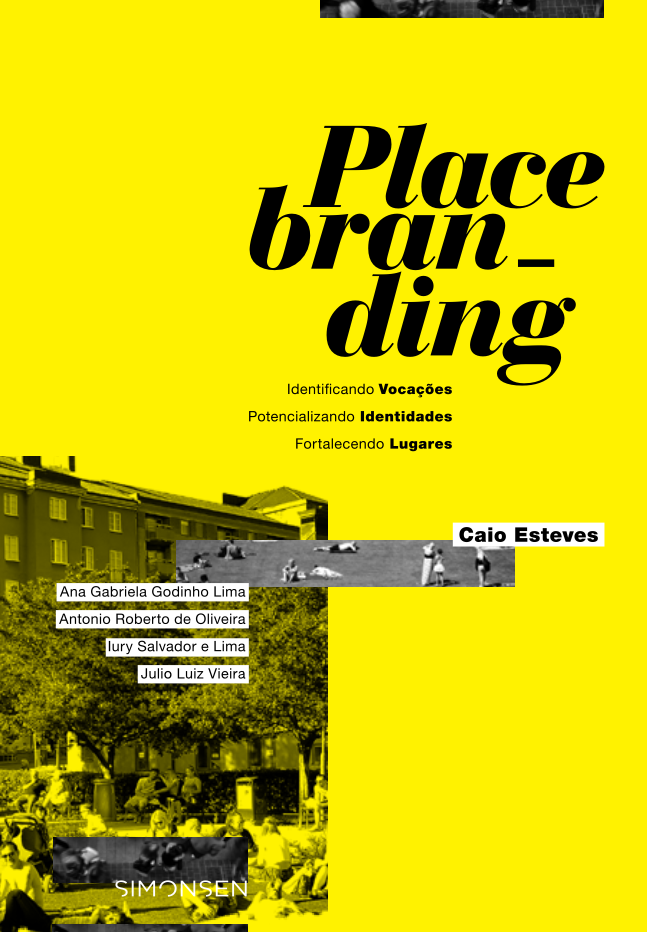
Place Branding is the first Brazilian book entirely dedicated to the subject. A pioneering work that combines urban issues with marketing and design to reveal how cities, neighbourhoods and countries can be developed as brands, not through logos or campaigns, but through what makes each place unique and irreplaceable.
About the book
Published in 2016 by Editora Simonsen, Place Branding brings together Caio Esteves and contributors from various fields—architecture, urban planning, communication, marketing and public management—to discuss a subject that was still in its infancy in Brazil: how to build place brands that arise from the place’s true identity, rather than from an image manufactured for external consumption.
The book starts from a simple yet rare observation: places are not products. And place branding is not destination marketing. It is a multidisciplinary process involving communities, latent potential, stakeholder engagement and a long-term strategic vision, capable of uniting individuals around a common and transformative idea.
“Much more than just beautiful images, place branding works with the concept, the strategic identity that drives and sustains a place.”
What you will find in this book
Place Branding is organised around three pillars that have become the methodological foundation of Caio Esteves’ work: identifying strengths, enhancing identities and strengthening places. Each of these pillars is explored through practical national and international examples, ranging from small towns in rural Brazil to leading international case studies.
Among the topics covered: what distinguishes place branding from city marketing and destination branding; why logos matter less for cities; how to involve residents, visitors and investors in the same process; and how to work with places that lack obvious tourist attractions, because every place has a vocation, even when it cannot yet name it.
Who is this book for
Public managers, mayors, councillors and planners who want to understand how to build a consistent place brand. Marketing, communications and design professionals working with the public dimension of places. Architects and urban planners who understand that physical space is not enough without a narrative to underpin it. And anyone who wonders why some cities have character whilst others seem like inferior versions of existing ones.
Book details
Author: Caio Esteves · Publisher: Simonsen · Year: 2016 · ISBN: 978-85-69041-22-1
Foreword: Antonio Roberto de Oliveira · Contributors: Ana Gabriela Godinho Lima, Iury
Salvador and Lima, Julio Luiz Vieira
2016 · Simonsen Publishers · ISBN 978-85-69041-22-1
 FAQ
FAQ