

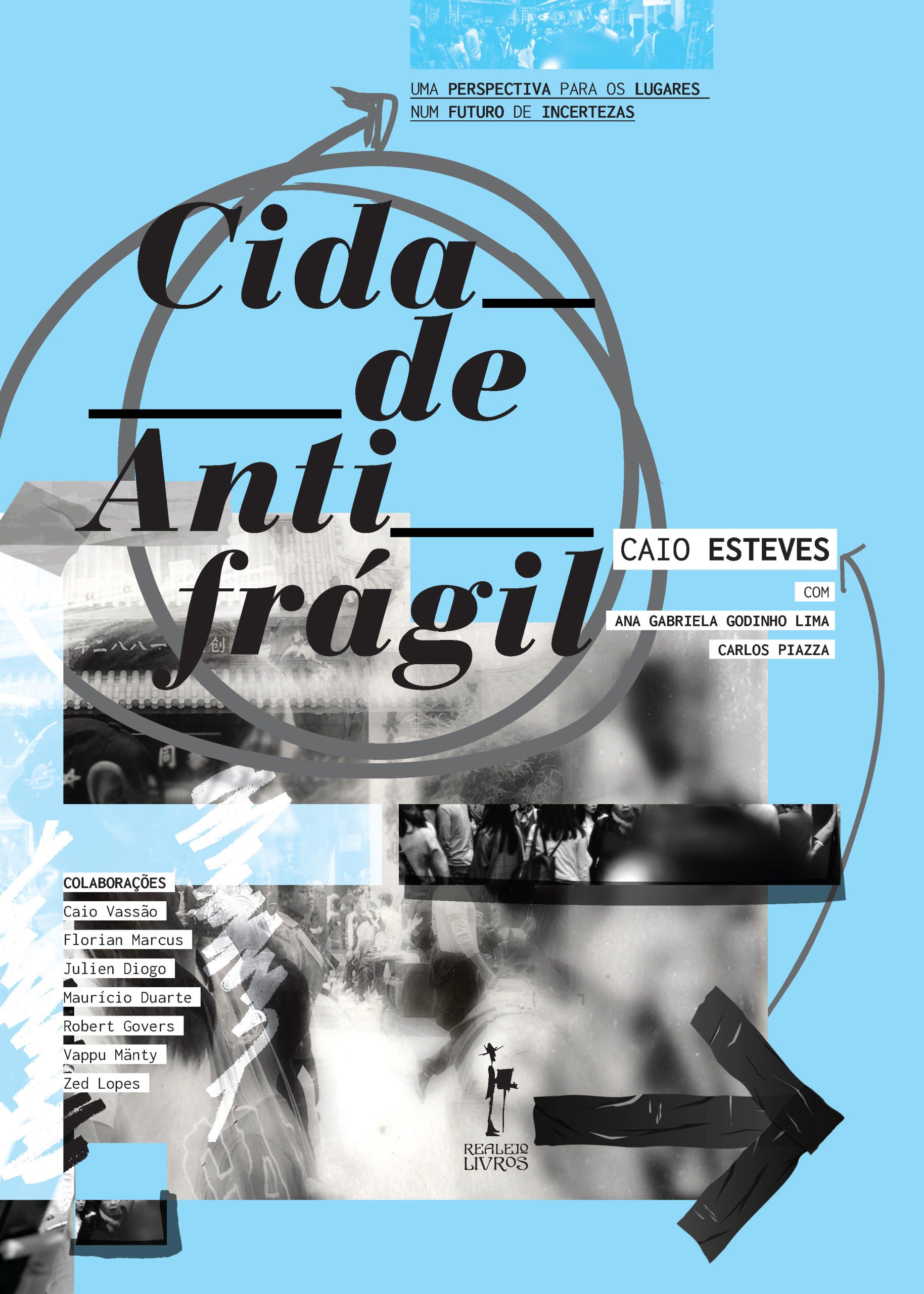
Cities are living organisms. Like all living organisms, they adapt and evolve. Some consider themselves smart, others creative; some sustainable, others tourist-oriented, green, industrial or global. Regardless of their characteristics, they all need to prepare for a future that is always uncertain.
A perspective on places in a future of uncertainty
Cidade Antifrágil is Caio Esteves’ third book. Published in 2021, against the backdrop of the pandemic that rewrote the rules of urbanism, the book proposes a new way of thinking about places: not merely resilient, which withstand challenges and return to their previous state, but antifragile, which grow stronger through crises.
About the book
Drawing on Nassim Taleb’s concept of anti-fragility—the idea that some systems not only survive chaos but evolve because of it—Caio Esteves applies this thinking to the world of places. The result is a groundbreaking approach that combines place branding, placemaking and a vision of the future to build cities that are more dynamic, adaptable and prepared for the uncertainties that the 21st century has made inevitable.
“The anti-fragile city is one that understands the uncertain landscape of an unpredictable future and which, rather than trying to predict it, creates mechanisms dynamic enough to deal efficiently with the crises it will certainly face — and which, in addition to returning to its previous state, learns, improves and evolves.”
What you will find in this book
Antifragile City is structured in four parts. The first builds the conceptual framework, from Taleb to contemporary urbanism, which underpins the idea of antifragility applied to places. The second presents the twelve dimensions of the antifragile city, ranging from identity and vocation to optionality, transparency, supraterritoriality and community vitality.
The final two parts, written by Ana Gabriela Godinho Lima and Carlos Piazza, explore two themes that conventional urban planning rarely addresses with rigour: the gender dimensions of antifragile cities, and the relationship between technology, antifragility and the myth of smart cities.
Who is this book for
Public officials who need to make decisions in the present without knowing what the future holds. Urbanists and planners who realise that traditional forecasting models cannot cope with today’s complexity. Place branding and placemaking professionals who want a more robust approach to the projects they develop. And anyone who lives in a city and wonders why it always seems reactive, responding to crises rather than preparing for them.
Book details
Author: Caio Esteves
Publisher: Realejo Edições · Year: 2021
ISBN: 978-65-990108-6-6
With contributions from: Ana Gabriela Godinho Lima and Carlos Piazza
 FAQ
FAQ